
The Role of the Internal Verifier in Cervical Cytology training and education
Sue Mehew, Consultant Biomedical Scientist, Norfolk and Norwich University Hospital, and Former Director of The Scottish Cytology Training School
After previously encouraging two of the Assessors in Scotland to share about their experiences being Assessors in the UK cervical screening programme - Cytology training scheme through a blog for the BAC, I felt it was only fair that I also put pen to paper and share something about the other important element in the UK training in cervical cytology and that is being an Internal Verifier (I.V).
So, what is an Internal Verifier?
In essence, IVs act as quality guardians of the assessment process. They train and monitor the work of Assessors, verify assessment decisions, ensure compliance with standards, provide feedback and maintain the integrity and credibility of the educational process.
An Internal Verifier cannot be an Assessor but works within the cytology training centre and should provide the Assessors with advice about the training process and copies of the:
Syllabus
Marking guidance
All forms & worksheets
| Lots of forms need to be completed but thankfully guidance is available in the NHSCSP Training document. |
As the then Assistant Manager of the Scottish Cytology Training Centre, I first took on the Internal Verifier role when the City and Guilds (C&G) cervical screening qualification was introduced in the UK in 2007. This established an External Verifier/Internal Verifier/Assessor system and the IV and Assessor framework has been continued by the Cervical Screening Programme after C&G decided to cease their support when numbers of candidates for the qualification reduced 10 years later.
Supporting Assessors
Some of the UK cytology screening laboratories frequently have trainees, whilst others only rarely employ them. Therefore, qualified experienced staff from within the laboratory may find themselves being asked to take on a new role of Assessor and so will require training and familiarisation with all the various paperwork (loads of different documents!!) and systems required and this is co-ordinated by the Internal Verifier. It is important to stress here that it is vital the Assessor has sufficient time allocated to take on this important role within the department.
Once the Assessor is trained and both the Learner(s) and Assessor are registered with the Screening and Education Workforce team in NHS England the first thing the IV will encourage the Assessor to do is devise, in agreement with the Learner, an overall Training Plan in order for the Trainee to complete - screening the required number of cytology cases and all the Units in the syllabus in the 18 months to 2 years allocated time.
This working in agreement with the Trainee is a key element of how the training programme works as well as regular meetings between Assessor and Trainee - at the start of each Unit - when target dates should be set; during any training sessions and again when feeding back on individual’s performance of submitted assignments and it is vital all sessions should be documented on the appropriate paperwork by the Assessor.
Sampling and feedback
When training is underway the Internal Verifier will devise a “sampling plan” based on the individual’s Training plan and the experience of their Assessor. Experienced/competent Assessors usually don’t require such close monitoring as those new to the process.
This means the Assessor’s work is sampled and there is regular contact with Assessors, including periodic sampling of the work from units that have been completed by Trainees. This sampling should include:
Check progress with overall training plan
A check of the assignment submissions and any re-submissions
Check of any paperwork especially “Learning Assessment Records”
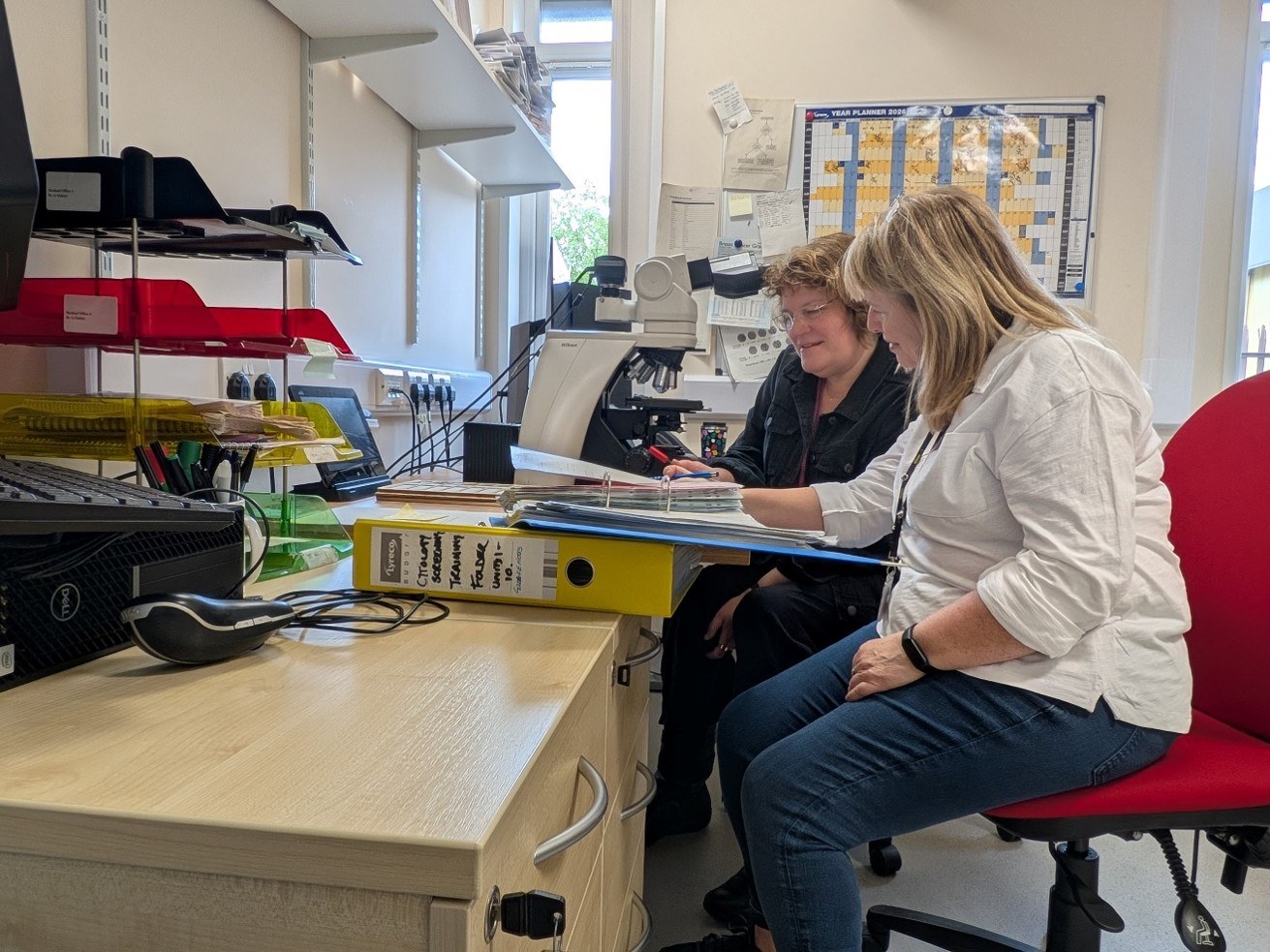
Advising on creation of a Training Plan. Internal Verifier – Sue Mehew, Assessor – Fiona Robertson |
| Learning and Assessment Record (LAR) Planning and feedback form Unit 001 |
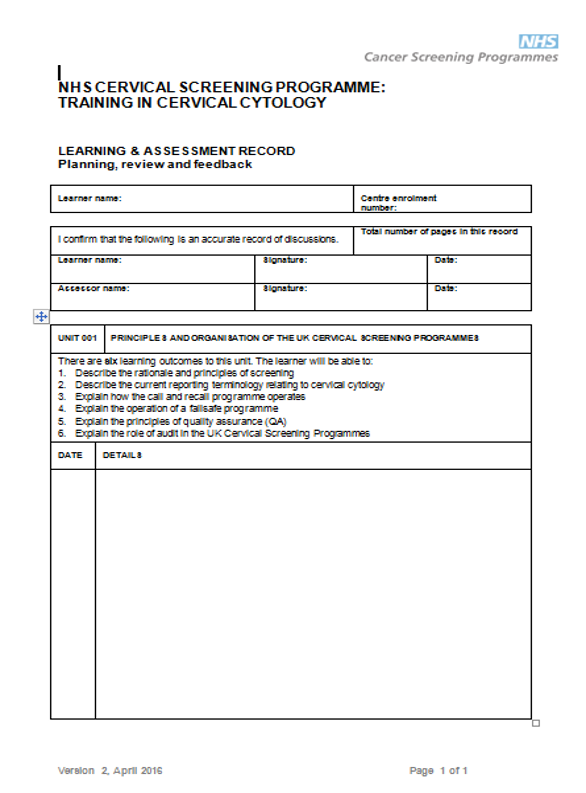
| One of the Learning & Assessment (LAR) forms to be completed, where the Unit training plan, discussions with the trainees and expected submission dates will be detailed. |
Once sampled and checked through, the Internal Verifier produces a Report for the Assessor, which includes any suggestions for improvement, any paperwork omissions, if any re-submissions of pieces of work are required and if a revision of the Training Plan is advisable. One element I have continued from the days of C&G Internal Verification rules is to feedback in red ink, which if nothing else helps the IV reports be identified amongst the reams of paperwork involved in completing the portfolio!
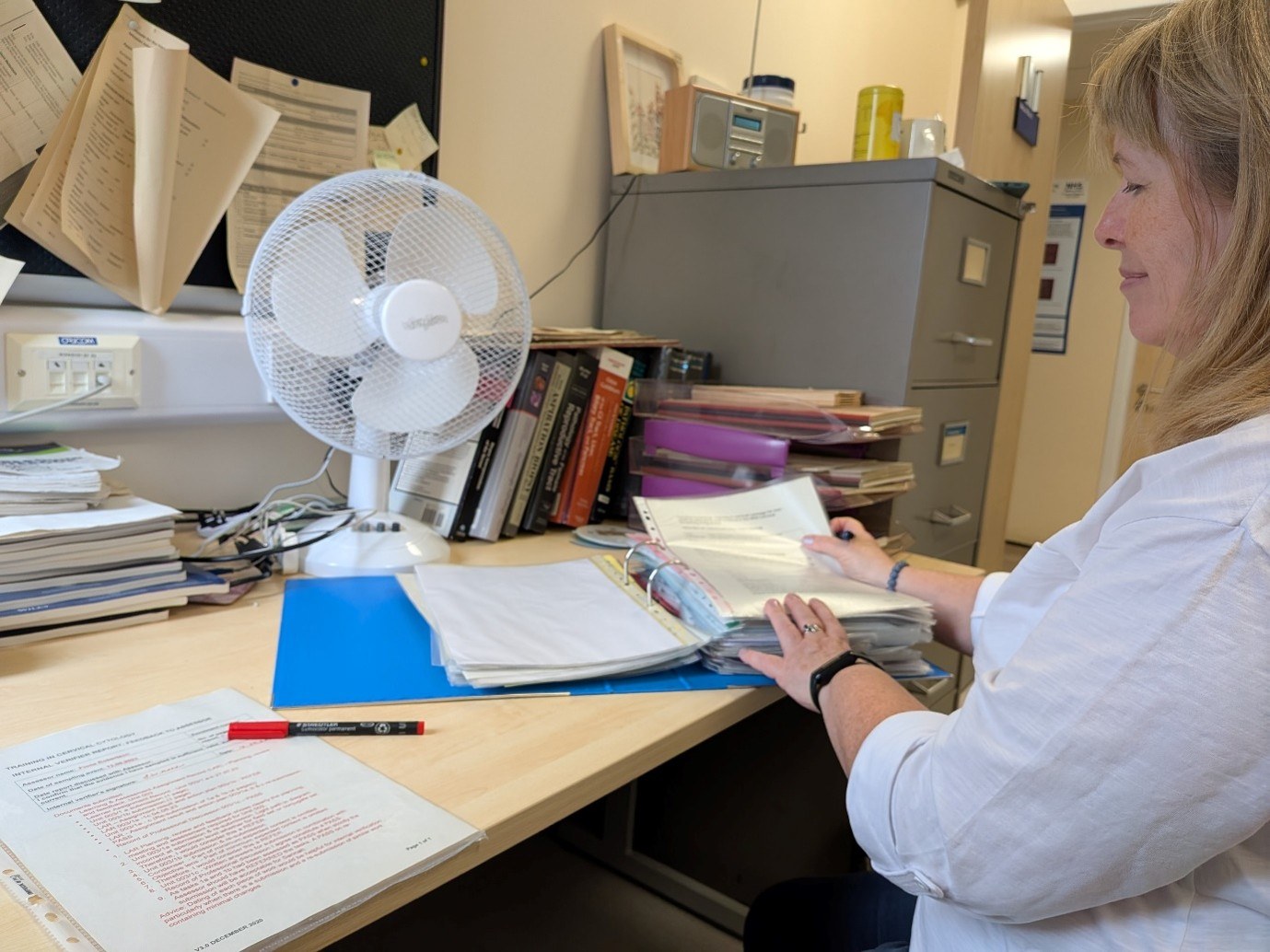
| Going through an Internal Verifier Report with an Assessor |
Monitoring trainee progress
Every quarter a Tracker spreadsheet should be completed by the Assessors for each Trainee - recording the number of cases screened and Units undertaken and then sent to the Internal Verifier who will also log any verification sessions. All the information is checked and if any issues with progress are noted then a revision of the Training Plan may be suggested at this point. The Trackers are then sent to the Administrator in the Screening and Education Workforce team in NHS England.
Standardisation and cross marking
Another activity of the Internal Verifier is to organise Assessor/IV cross-marking activities. These are exercises to check that all Assessors and Verifiers are working to a similar standard and interpreting the marking guidance correctly and the completed exercises are discussed at regular Training Centre Assessor meetings. In addition, Internal Verifiers undertake regular standardisation exercises co-ordinated by the Screening and Education Workforce team in NHS England.
Final portfolio review
Once the Trainee has completed all the Units, I will check through the entire portfolio when they attend the Pre-Examination course and I will hopefully then be in a position to sign off any outstanding paperwork and complete the forms required for the Trainee to apply to sit the final examination.
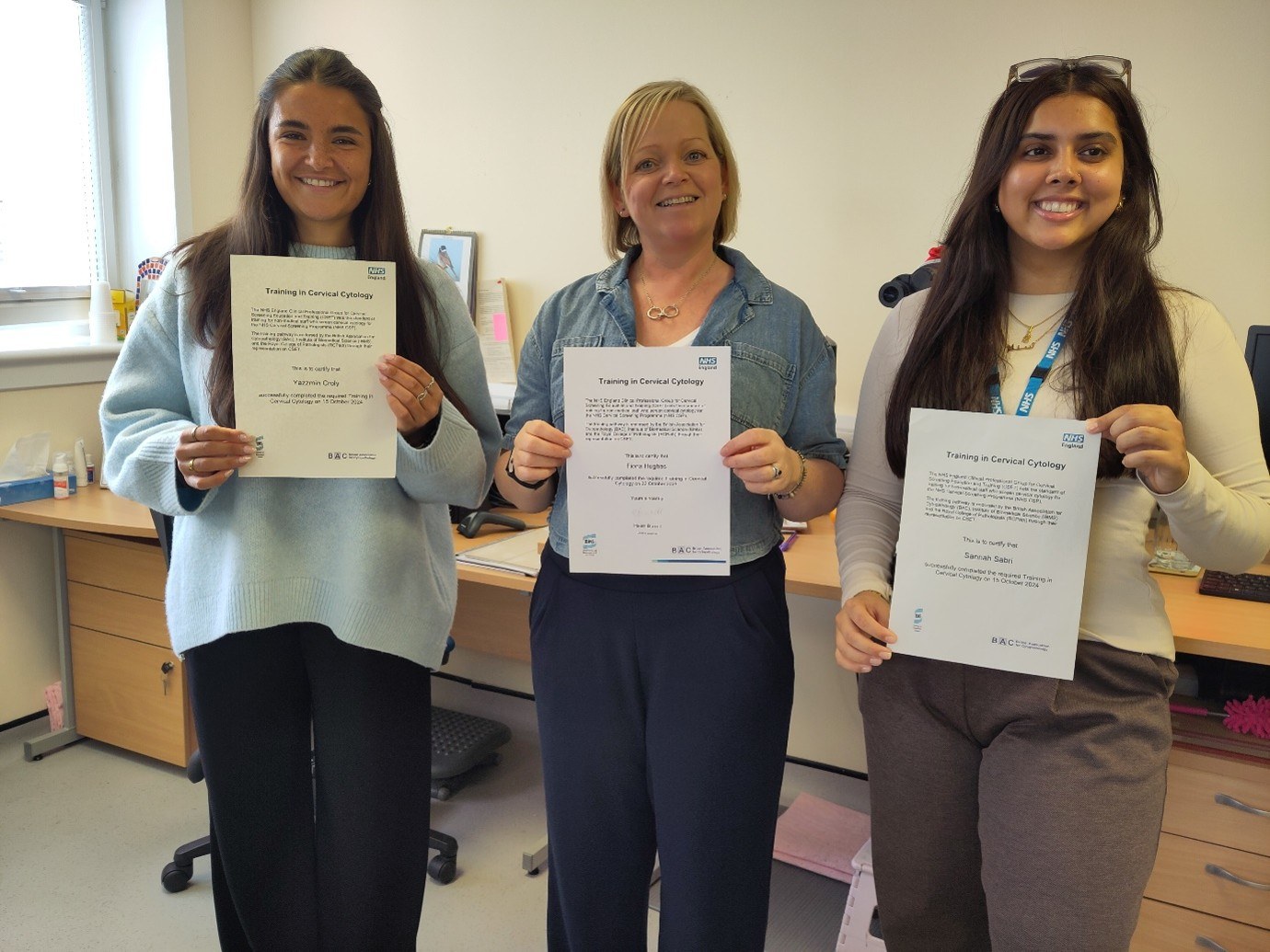
Exam success makes the process all worthwhile – a few of the new generation of cytologists Yasmin Croly, Fiona Hughes and Sannah Sabri. |
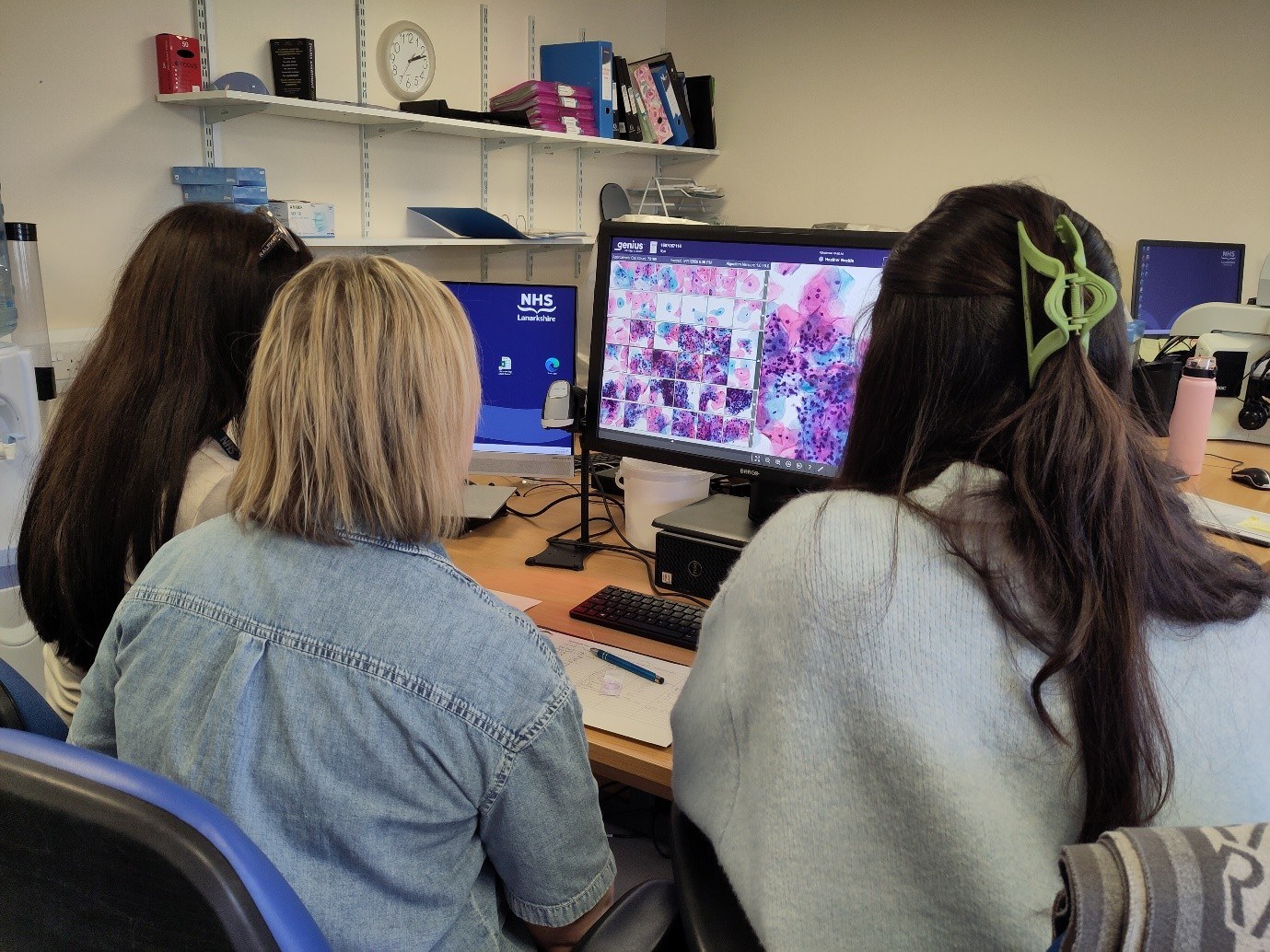
| Taking the opportunity to view cases on the HOLOGIC Genius digital system |
Why Internal Verification matters
The internal verification may seem like a laborious process, but Assessors tell me they appreciate the support they receive and although it can feel disappointing when an IV decides an assessment should be a reclassified as a Refer rather than a Pass, this all helps maintain the quality of the training and assessment.