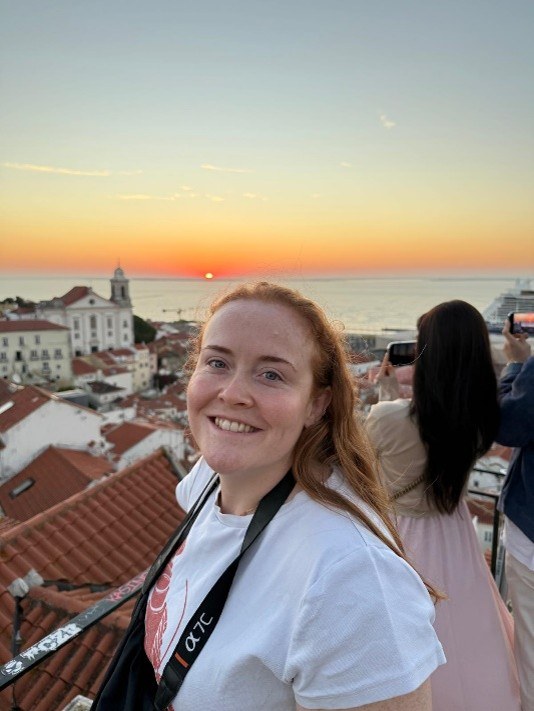
Becoming a Nurse Colposcopist
Eilidh McCall, Nurse Colposcopist, Royal Infirmary Edinburgh, NHS Lothian
Towards the end of 2020, like many others in the NHS, I began considering a different career path. I was burnt out and felt as though I had lost my passion for nursing. At times, I honestly believed I would leave the profession altogether. I made the jump to public health and spent three years working in two separate roles, the latter being a project manager within screening and early detection, population health.
My first insight into colposcopy came when I undertook my cervical screening training, at the time the course was run through my local university. I had been a qualified nurse for eight years, but cervical screening was a relatively new path for me, my only experience of screening being - a patient. The more I read about screening the more interested I became. I looked into colposcopy in more detail and arranged to observe a clinic for an afternoon. The passion started to come back, and I felt this was something I could genuinely see myself doing.
I took the leap and applied, and after a successful interview I was offered a training post that would take two and a half to three years to complete. I started my training post in October 2023, days after a ‘special’ birthday.
Getting my head around the full requirements needed to be a trained colposcopist was a long process. The training begins with an online course through the British Society of Colposcopy and Cervical Pathology (BSCCP). This is an overview of normal anatomy, basics in cervical cytology and pathology, abnormal cervical pathology, pathways and follow ups, cervical screening, and history of HPV.
The colposcopy training requires pathology and cytology laboratory time, regardless of whether you are a medical doctor or nurse completing your training, although nurses are required to spend more time in the laboratory.
As someone whose experience with anything remotely related to cellular studies ended in high school, this aspect of the training caused me considerable anxiety. I was very much starting from the most basic introduction to cytology and pathology. I would read textbooks and still felt I needed concepts stripped back even further, so I turned to YouTube videos on ‘basics of pathology’ and ‘basics of cervical cytology’. Then it was time to attend the labs in person for the first time.
The staff working in the laboratories were hugely accommodating. They took the time to break down complex concepts into language I could understand and were always willing to answer questions.
While reviewing a pathology report, I came across a finding that I did not fully understand. I emailed a colleague for guidance, and she kindly invited me to review the slides with her in person. I can’t thank the team in the laboratories enough.
This experience reminded me that asking for help isn’t a weakness but an essential part of professional growth. Early in my training I worried that my lack of cytology and pathology knowledge would be viewed negatively, but my colleagues' willingness to teach reinforced the value of multidisciplinary learning.
In the beginning stages of learning practical hands-on techniques such as performing cervical biopsies, I was instructed to practise on plums. I would sit in clinic on my own getting the feel for using biopsy forceps, handling ‘samples’ and practising the magnification with the colposcope. I practised vulval biopsies with a punch biopsy on banana skin, and LETZ treatment on over ripe bananas.
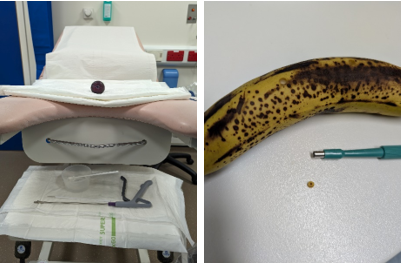
Clinical practice with fruits
Once I had practised on my fruits, I started to gain practical experience under the close supervision of my mentors. The training programme was rigorous, requiring theoretical coursework, extensive supervised clinical practice, workplace-based assessments, multidisciplinary meeting attendance, an audit project and a final OSCE examination. While demanding, these requirements ensured I developed both technical competence and clinical confidence.
The final OSCE consisted of ten stations in which trainees could be questioned on any aspect of the training programme. There were two stations with histology or cytology slides to describe and give clinical opinions, and treatment plans.
The area of examination I was most worried about had been cytology and histology interpretation. I was ‘delighted?’ to see an invasive squamous cell carcinoma used as my examination histology slide – something I could confidently identify! I immediately recognised that the basement membrane had been breached. What my pathology colleagues had been teaching had finally sunk in.
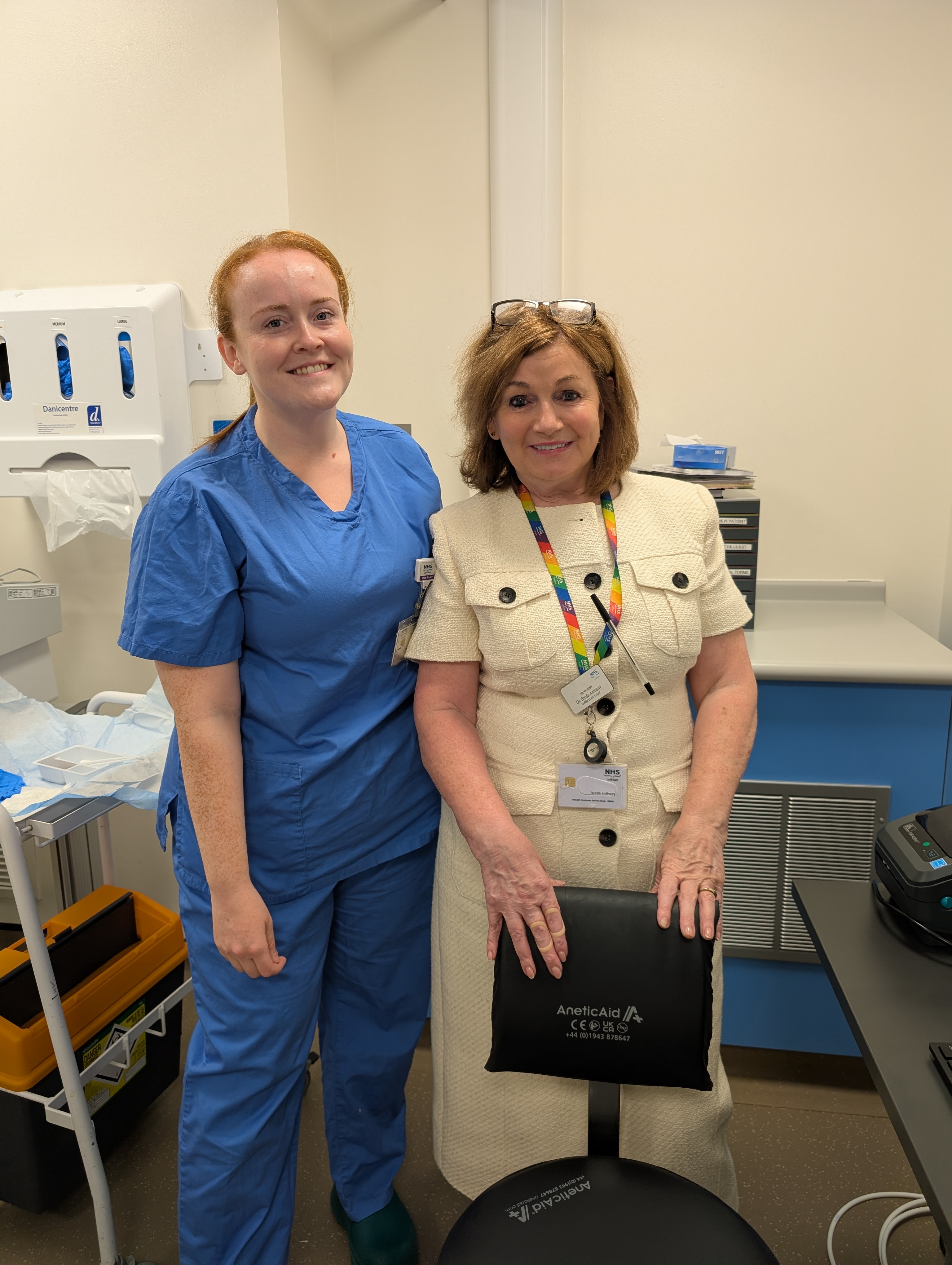
Eilidh with one of her mentors; Nurse Consultant, Dr Breda Anthony
I passed my exams and have done a fair bit of celebrating since finding out in May. I attended my first BSCCP Scientific Conference in Cork in May. I sat feeling inspired by fellow colposcopists, hearing of different work being carried out in different areas, Ireland, England, Wales, Kenya, Uganda, USA and many more countries.
Looking back, I realise it was not nursing that I had fallen out of love with, but my previous role. Colposcopy has challenged me intellectually and emotionally, allowed me to develop specialist skills, and gave me a renewed sense of purpose. I have always taken pride in being a compassionate and skilled nurse, and those qualities transfer especially well into colposcopy.
One of the most rewarding aspects of colposcopy is supporting patients through what is often an extremely anxiety-provoking experience. While the technical aspects of the role are important, I have come to appreciate that communication, empathy and reassurance are equally valuable skills. Knowing that these individual interactions can make a significant difference to a patient's overall experience is incredibly rewarding.
Six years ago, I was contemplating leaving nursing altogether. Today, I find myself at the beginning of an exciting new chapter as a fully qualified Nurse Colposcopist. I feel proud and my passion for nursing has not only returned but grown stronger. I look forward to continuing to develop my skills while making a meaningful difference to the hundreds of patients who rely on the colposcopy service each year.